
Subscriber question:
"I know dehydration can be a problem when flying at altitude for long periods, but I'm concerned about my bladder range if I drink water. What to do?" —Jack M.
Doug:
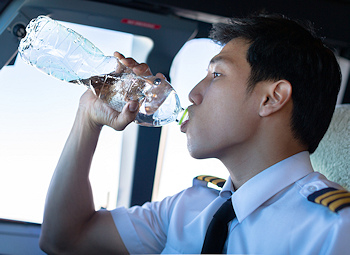 “I make it a point about 40 minutes before the end of the flight, when I’m going to have to shoot an approach, to drink a bottle of water and eat some kind of energy food.
I’m not a medical expert. But I do know that one of the symptoms of dehydration is irritability. Another is the inability to make decisions and to become disoriented.
If we’re flying high—and a lot of people think IFR flying just means slogging along in the clouds. Quite often it isn’t. It’s flying along in bright blue sky, bright sun. You’re above the tops. So you’ve been sitting up there in this bright sunshine up at altitude, which certainly contributes to dehydrating.
If it’s a long flight, perhaps your last meal wasn’t even a meal, but something that you grabbed out of the snack machine at the airport. So you’ve had your pack of sugar-loaded crackers or cookies, you’ve been dehydrated by your environment, and now you’re no longer able to make those good decisions, hard decisions, that need to be made.
I always recommend for everyone and it’s because I do it myself, about 40 minutes prior to having to shoot the approach, I drink some water and eat some kind of energy food—not sugar—but some kind of an energy bar, something like that. It will really have you much better prepared for flying an approach at the end of a long, hard flight.”
Do you carry a portable john on long flights?